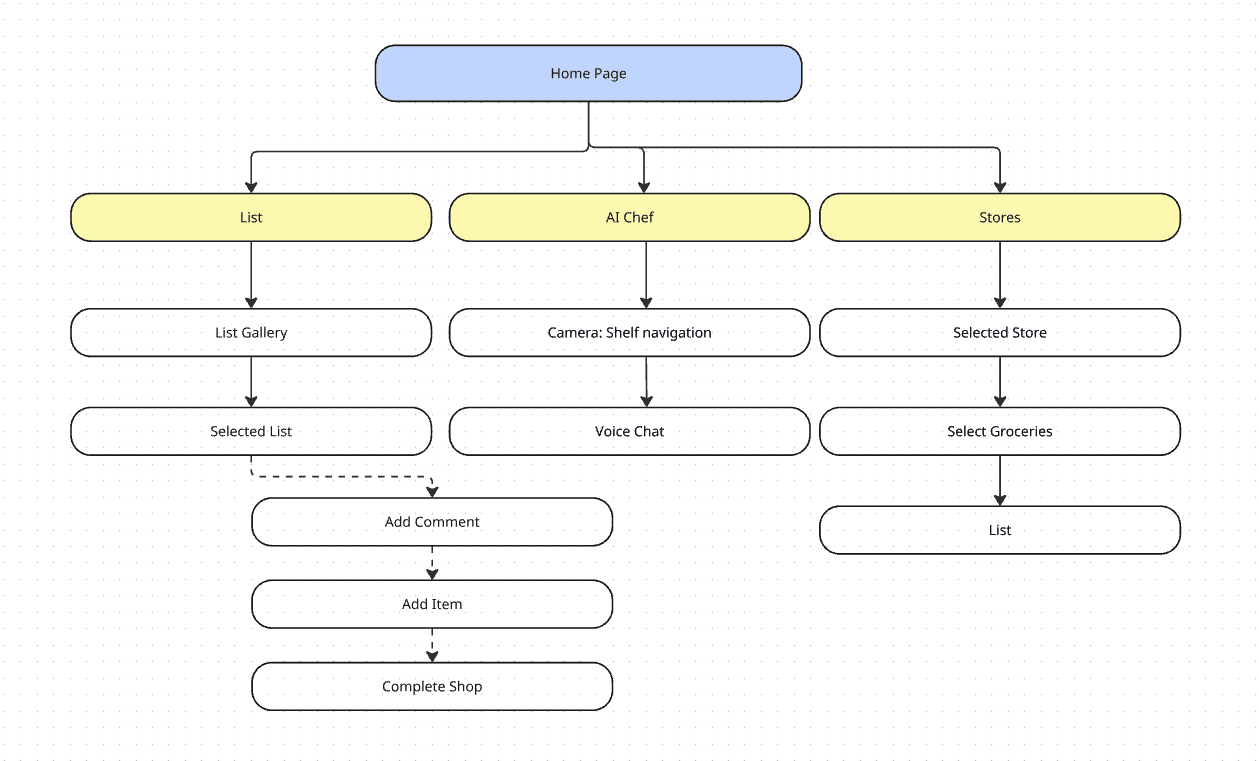
This user flow highlights the main features of the app and shows how users move through key tasks, including list management,
store selection, and AI-assisted support during in-store shopping.
Many people feel overwhelmed while grocery shopping, especially in large stores with unclear layouts and long aisles. Planning
meals, keeping track of grocery lists, and coordinating shared shopping responsibilities can be stressful, and existing grocery apps
often add to this frustration by feeling cluttered or overly complex. As a result, users struggle to shop efficiently and confidently
in-store
Simple Cart
OverView
Timeline
Figma
Miro
1 Week
Tools
Problem
User Persona
Research & Insights
Key Pain Points
Solution
Defining Design Goals and Principles
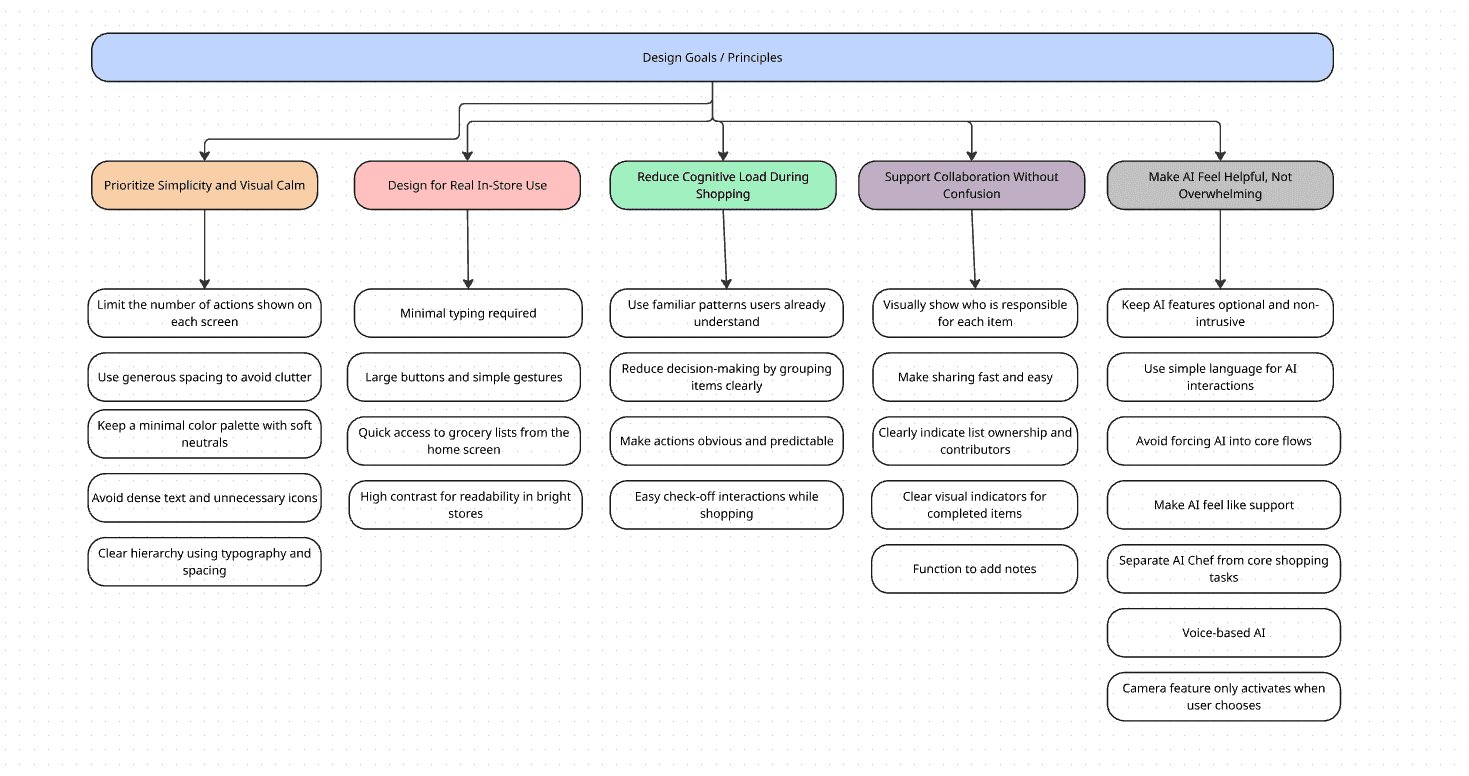
This brainstorming diagram outlines the key design goals and principles that guided my design decisions and helped turn research
insights into a clear, user-centered experience. It also helped me identify and brainstorm key features that would best support each
design goal.
Mapping the Core User Flows
Final Design
Entry Point and
Home Dashboard
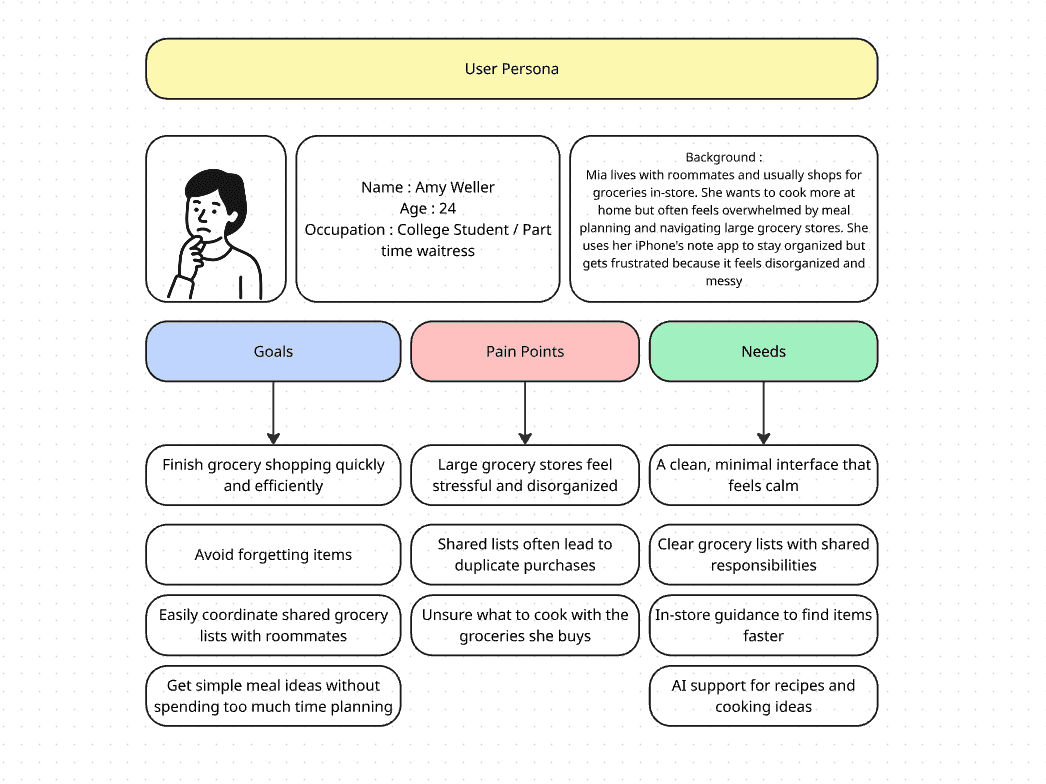
I created user personas based on research to represent the core needs, frustrations, and behaviors of typical users, helping guide design
decisions with empathy and clarity.
AI Powered Tool
Grocery List
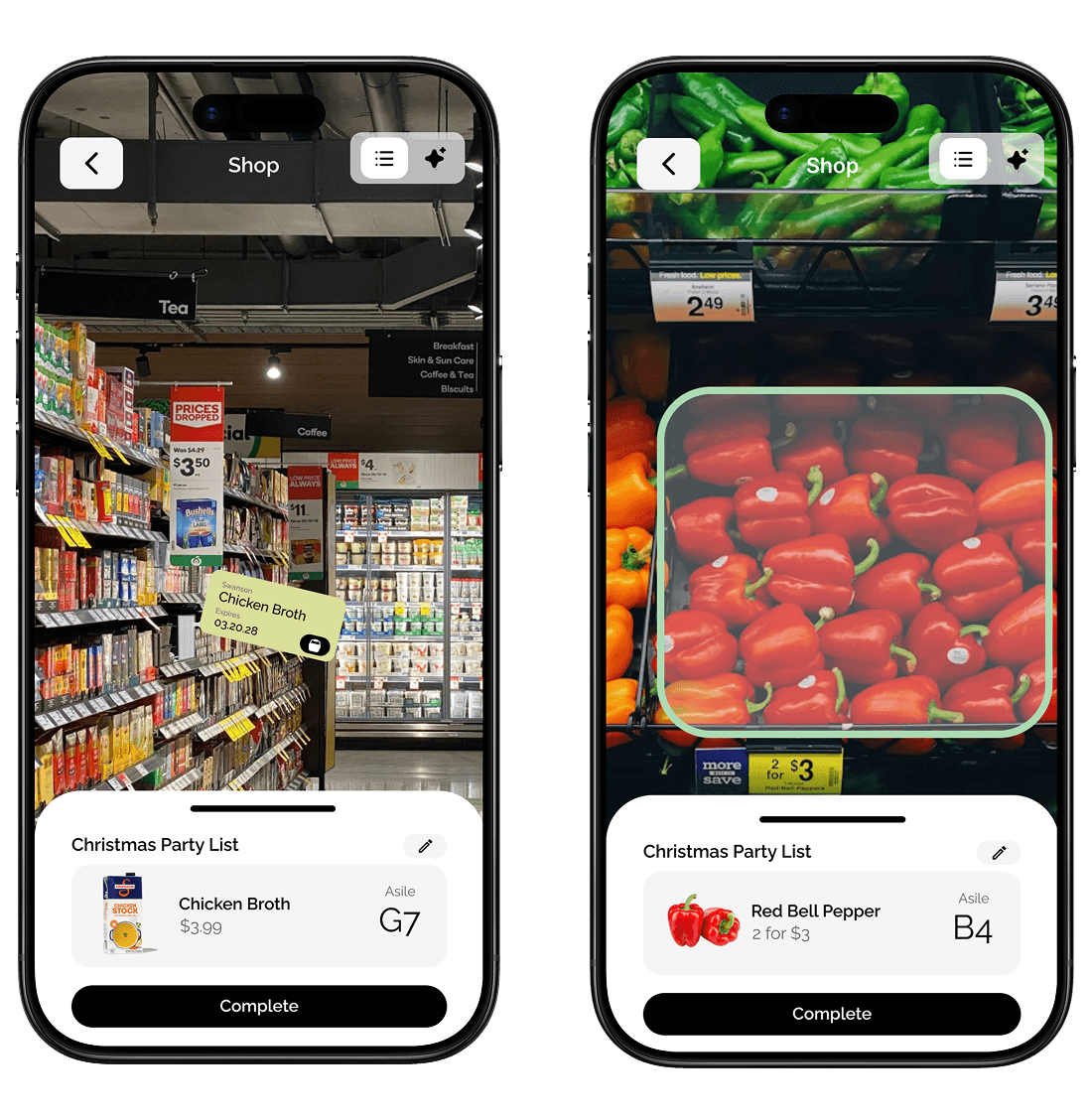
These pages let users add items to their list
and use the built-in camera tool for in-store
navigation. The camera guiding feature directs
users to the exact product location, making
grocery shopping faster and more efficient.
List Camera Guide
Simple Cart is a grocery companion app designed to make grocery shopping feel less overwhelming and more collaborative. The idea came
from my own desire for a grocery app that feels simple, modern, and genuinely easy to use, especially inside large and crowded stores.
I designed Simple Cart end-to-end, a clean and modern grocery companion app that helps users plan, shop, and cook with
confidence. The app supports in-store shopping through clear grocery lists, shared responsibilities, and AI-powered tools such as
shelf navigation and an AI Chef, all designed to feel optional, supportive, and visually minimal.
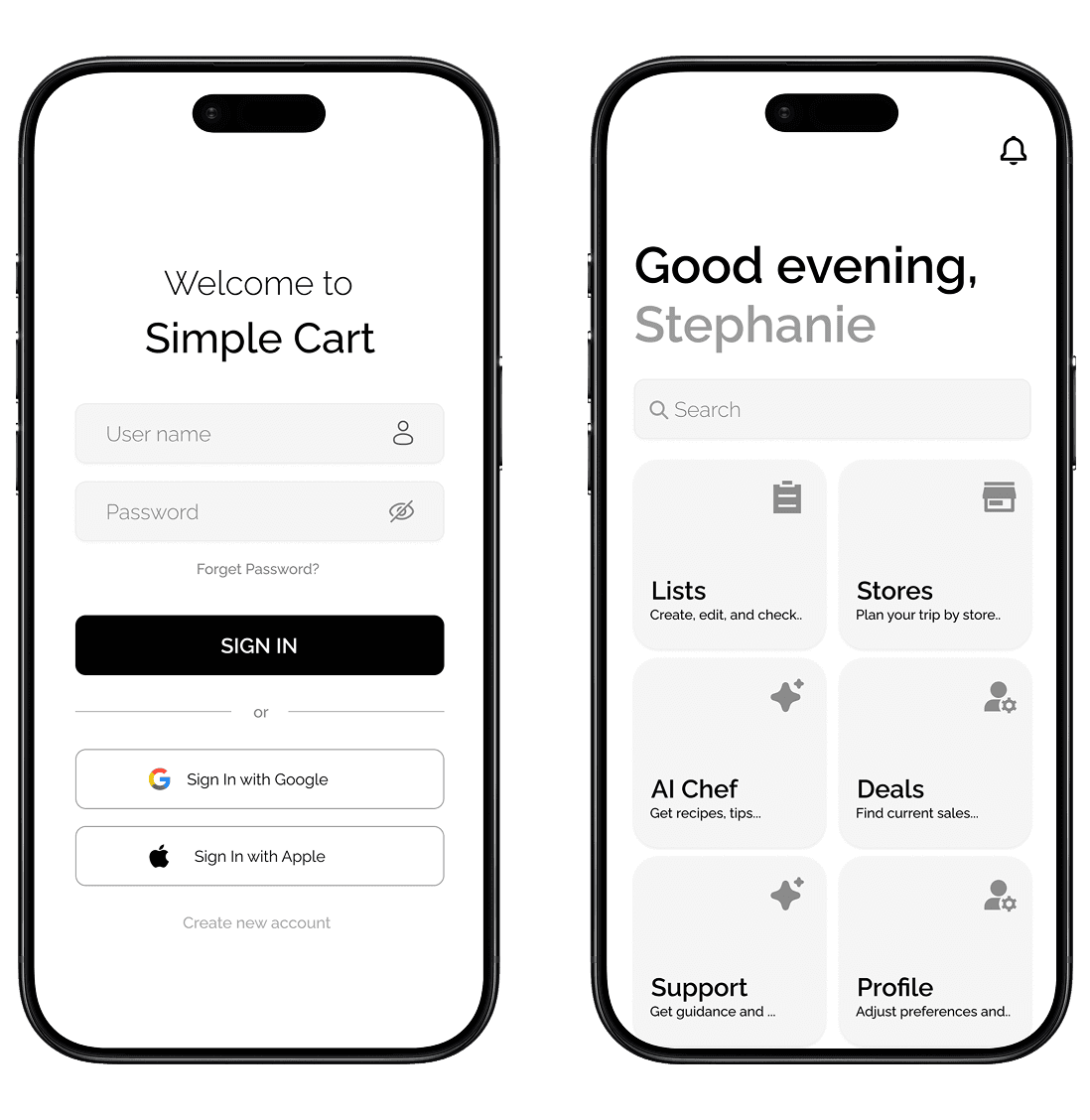
The login and home screens set the foundation for
the experience, providing a simple entry point and
clear access to the app’s core features. The home
screen prioritizes clarity and ease of navigation,
allowing users to quickly start a list, choose a store,
or access AI assistance.
Store Selection
and Item Browsing
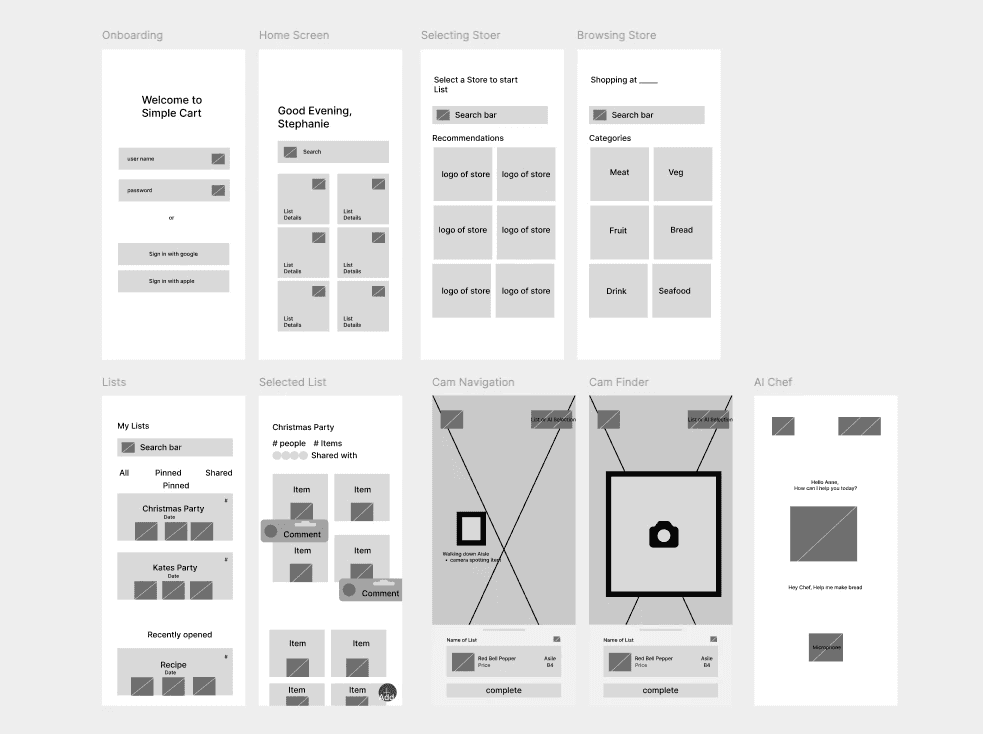
I created mid-fidelity wireframes to validate layout, hierarchy, and core user flows. This step helped me see how all features connect
across the experience and ensured the design stayed aligned with the original goals and principles before moving into high-fidelity design.
Grocery Lists
and Collaboration
AI Camera
Navigation
AI Chef
Reflection
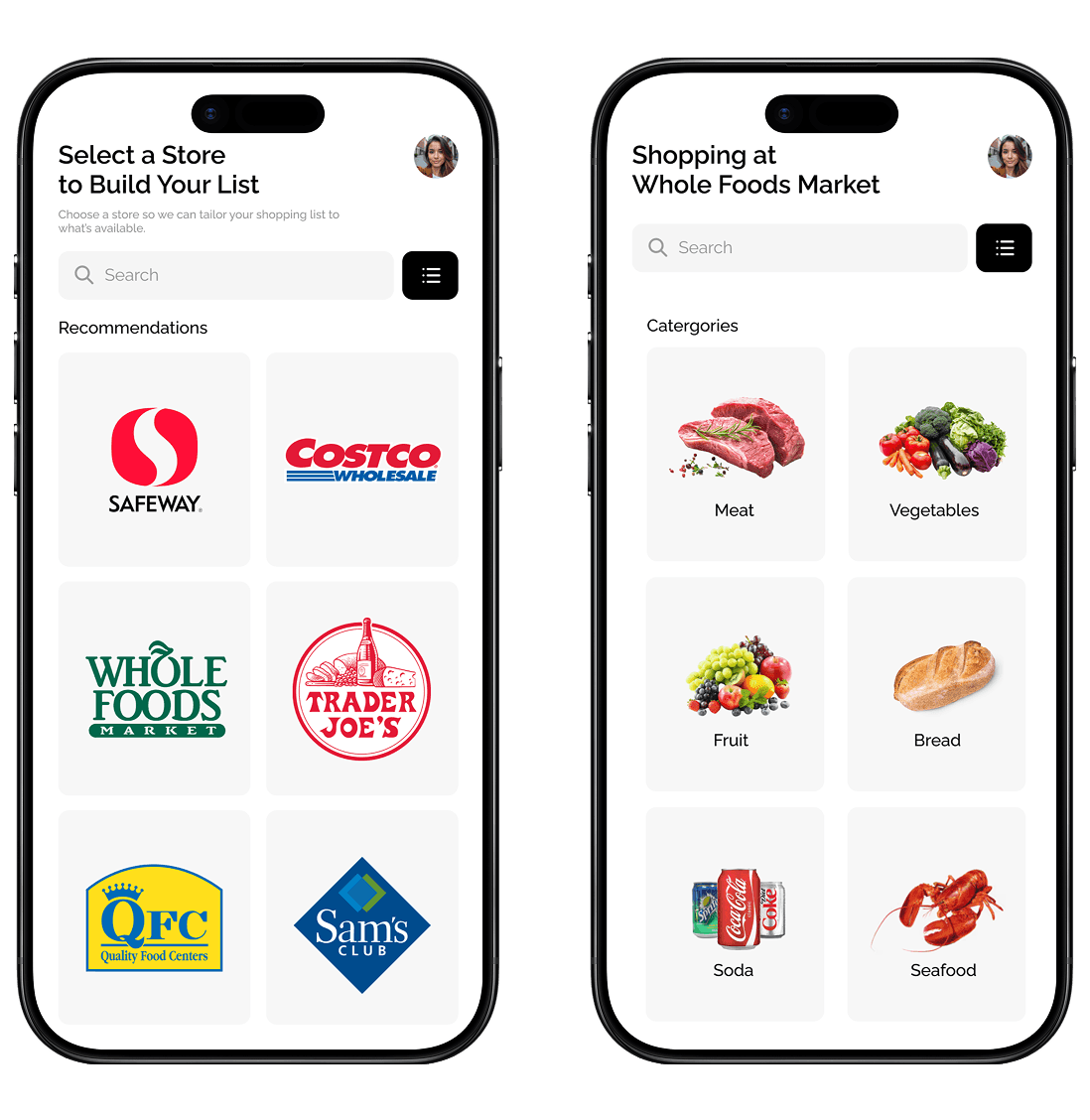
These screens allow users to select their preferred
grocery store and browse items by category, helping
them quickly find what they need and feel oriented
before shopping in-store.
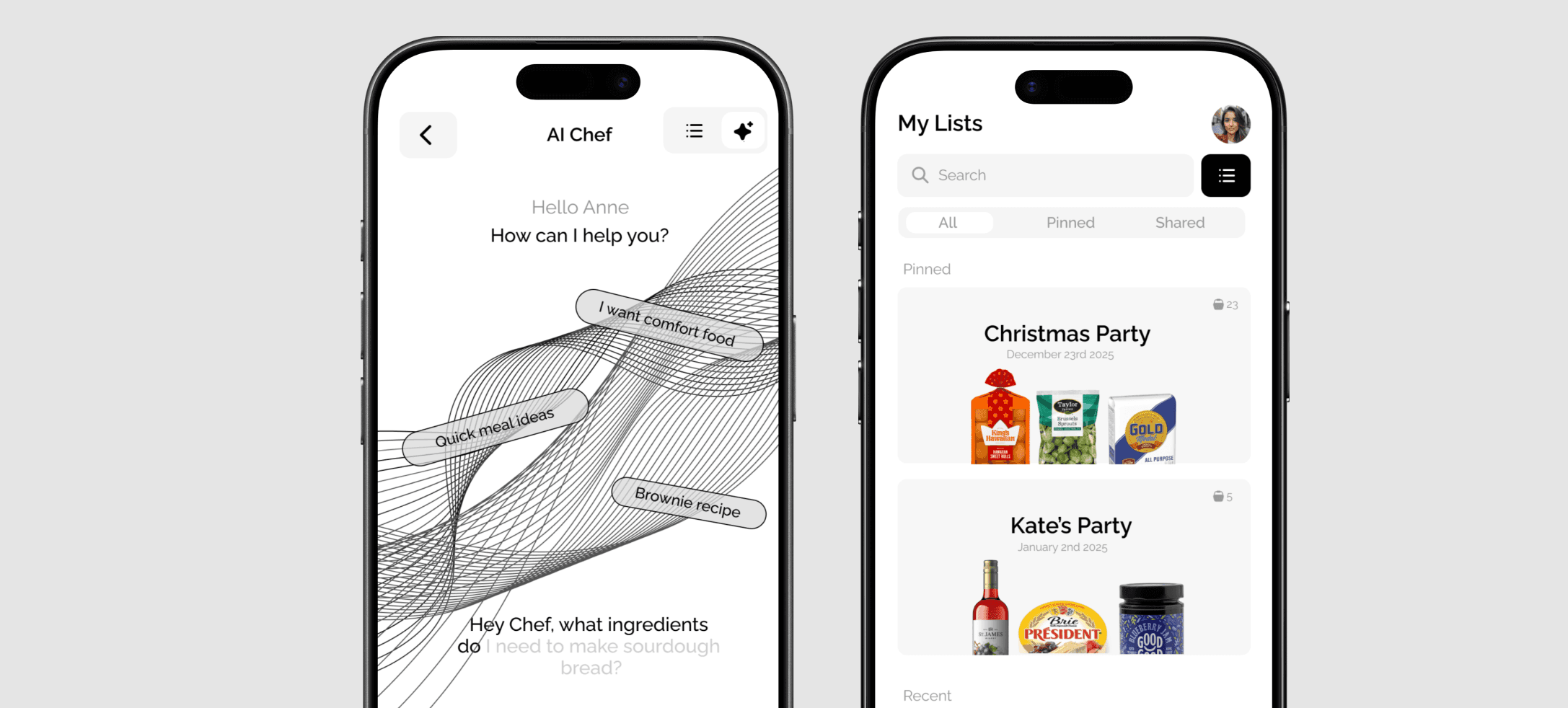
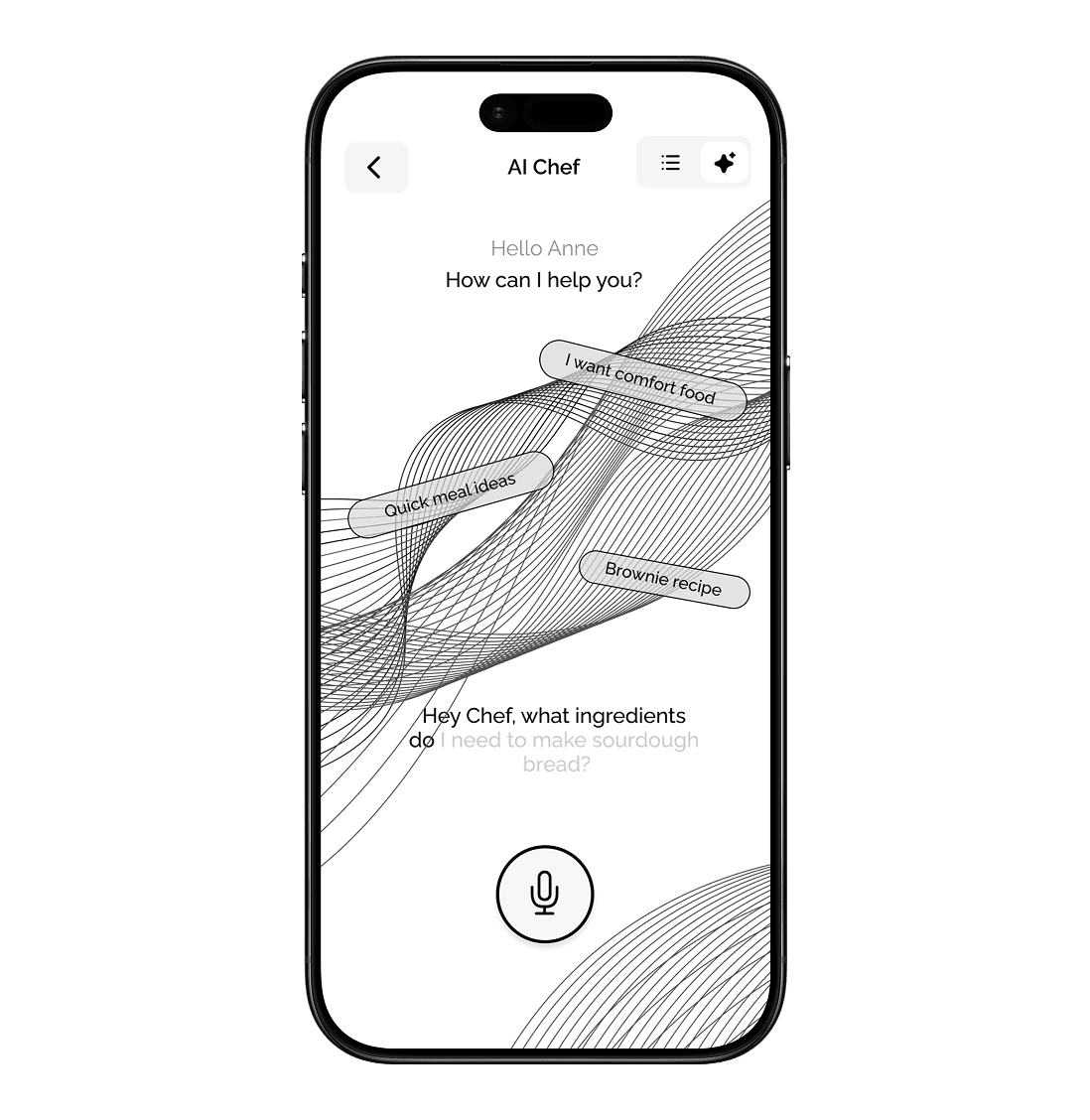
This voice-based AI assistant helps users with
recipes, ingredient questions, and cooking advice,
making meal planning feel more approachable
and less overwhelming.
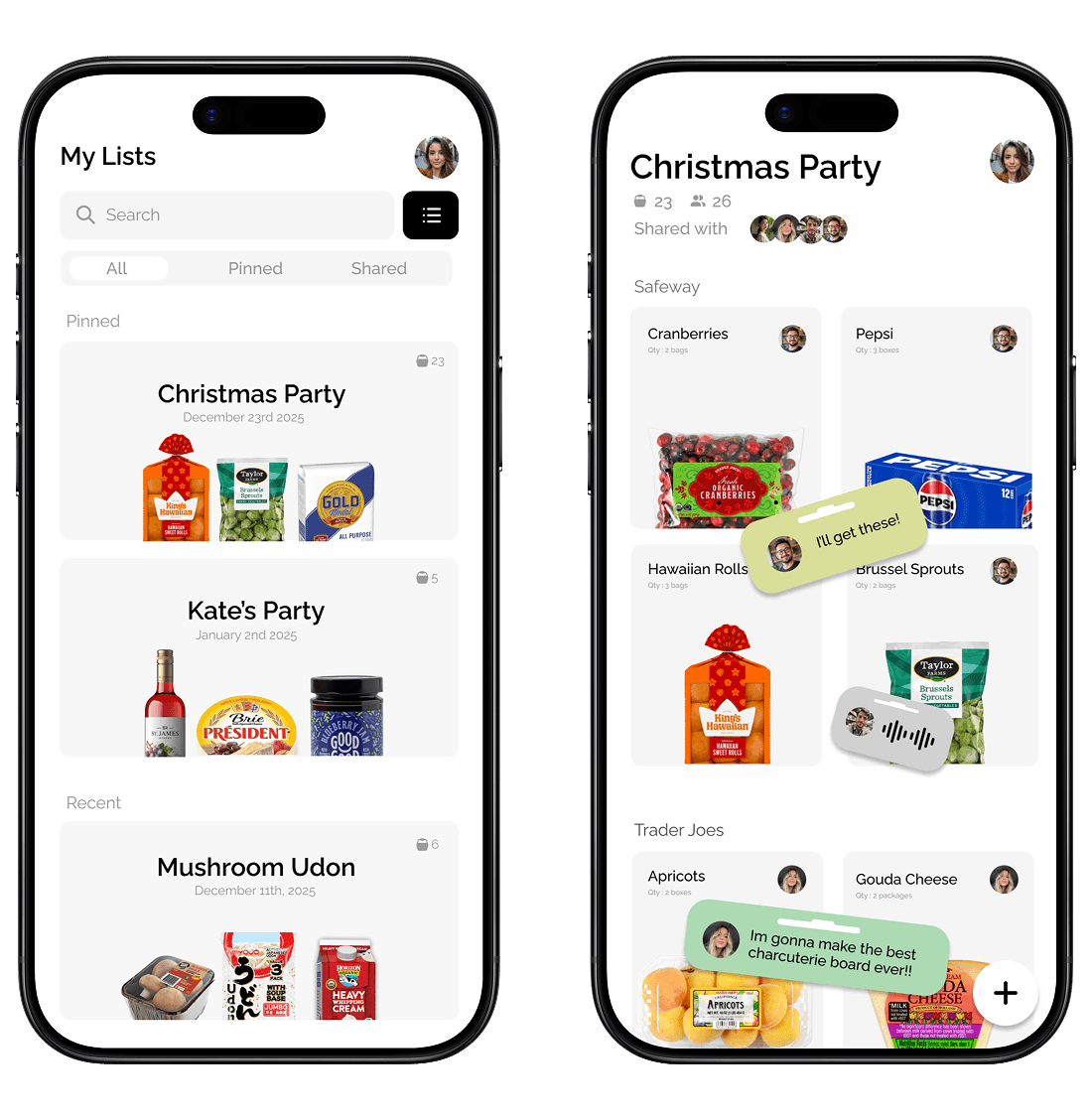
The lists overview provides a simple and
organized way for users to access past and
active grocery lists. Shared lists allow friends
and family to coordinate shopping by assigning
items, checking them off, and leaving comments
or voice notes to keep everyone aligned.
When a user selects an item from their grocery list,
the camera activates to help guide them to the correct
aisle in real time. Once the item is detected, the camera
highlights and frames the product to clearly indicate
that it has been found.
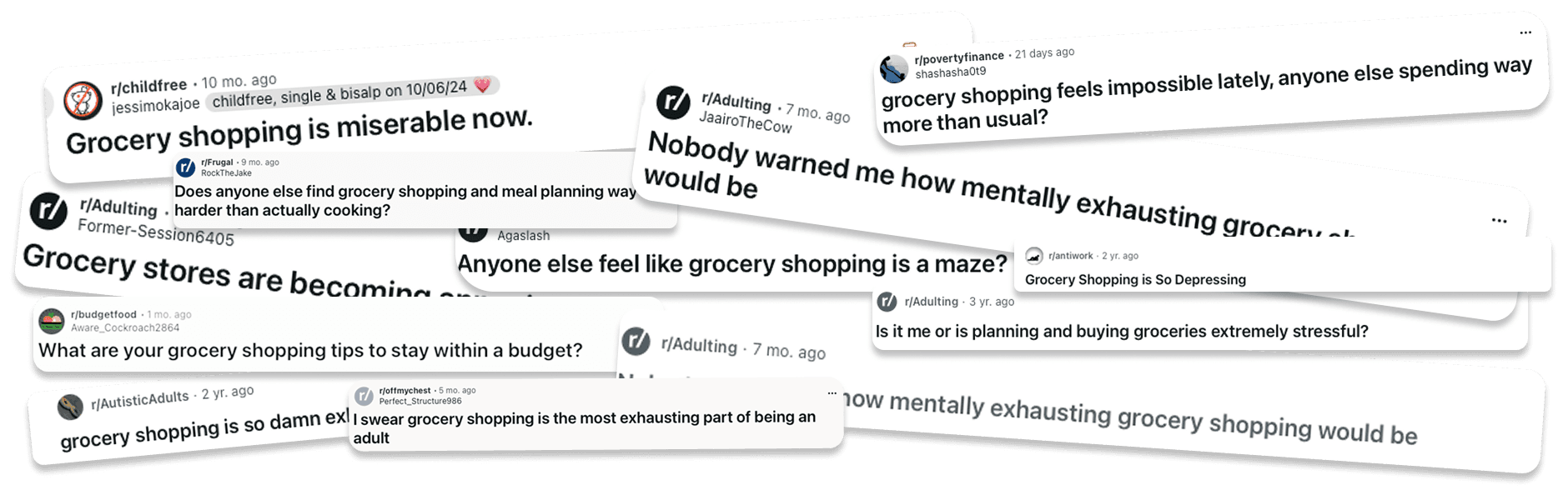
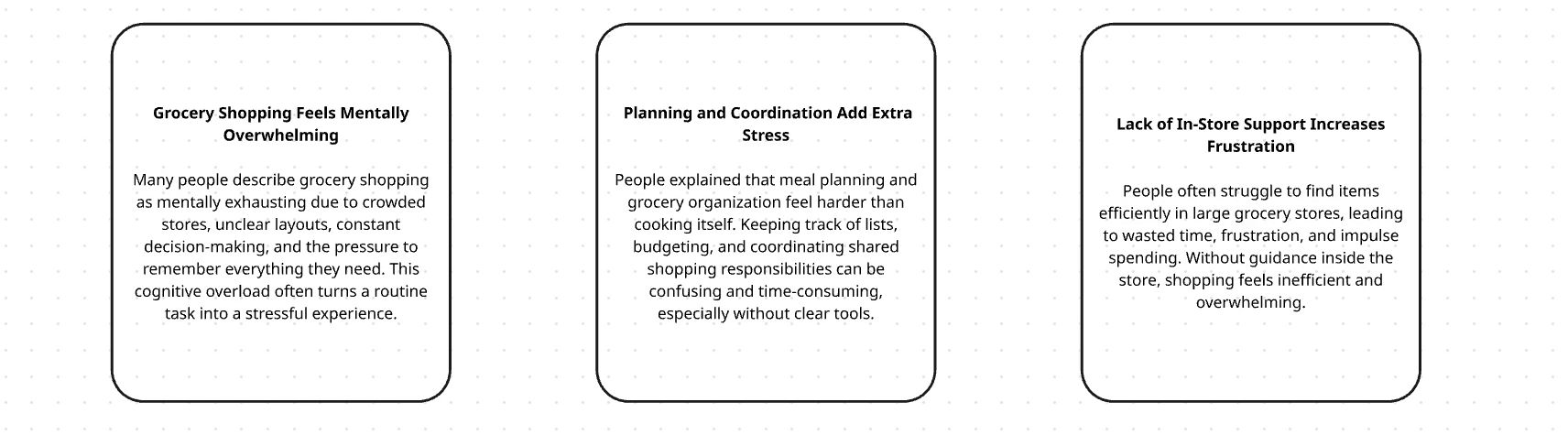
To better understand the real-world challenges people face with grocery shopping, I reviewed discussions on Reddit to understand common
frustrations people experience while grocery shopping.
This project challenged me to think beyond screens and focus on how design can support people in real, everyday situations. Grocery shopping
is often dismissed as a simple task, but through research and iteration, I realized how mentally exhausting and overwhelming it can be for many
users. Designing Simple Cart pushed me to prioritize clarity, simplicity, and emotional ease throughout the experience.
One of my biggest takeaways was learning how to balance powerful features, such as AI, with restraint. Rather than making AI the center of the
experience, I intentionally designed it to feel optional and supportive, ensuring it enhanced the shopping process without adding cognitive load.
If I were to continue this project, I would conduct usability testing in real grocery store environments and explore additional accessibility features,
such as voice-first navigation and personalization based on shopping habits, to better support diverse user needs.
The final design brings together research, design goals, and validated wireframes into a clean, modern interface. Each screen prioritizes clarity,
simplicity, and ease of use while supporting in-store shopping and AI-assisted features.
Mid-Fidelity Wireframes